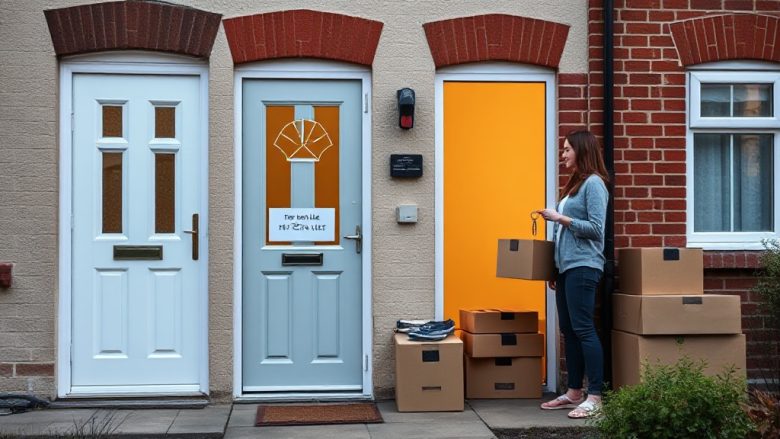
So you’ve decided to buy your first home. Congratulations, and also, welcome to the part where nobody tells you what actually happens next. One week you’re idly scrolling property listings, the next you’re lying awake wondering what a “deed of covenant” is and whether you can afford a two-bedroom flat in a town you’d never previously considered.
Here’s the reassuring bit: buying a home in the UK is a long process, but it’s a predictable one. It follows the same stages almost every time, and thousands of people who felt exactly as lost as you do right now have made it to the other side with keys in hand. What follows is a stage-by-stage map, with the pitfalls flagged at each turn. These first time home buyer tips in the UK are the ones I wish someone had handed me years ago, and they’ll carry you from the first savings transfer to the moment the estate agent hands over the keys.
Stage 1: Saving the Deposit and Knowing Your True Budget
Everything starts with the deposit, and the deposit starts with honest arithmetic. Most first-time buyers aim for at least a 10% deposit, though 5% deals exist and usually come with higher interest rates. On a £250,000 home, that’s £25,000 for the 10% route before you’ve paid a single fee. It sounds brutal, and it is, but breaking it into a monthly figure makes it feel less like a wall and more like a hill.
Don’t stop at the deposit. Your budget needs to cover stamp duty (many first-time buyers pay reduced or no stamp duty below certain thresholds, but check the current rules rather than trusting what a friend told you), solicitor’s fees, a survey, mortgage arrangement fees, and removals. A sensible cushion is a few thousand pounds on top of the deposit. Lenders will also stress-test your finances, so clear what you can on credit cards and avoid taking out new loans in the months before you apply.
Watch out for: a lifetime ISA. It can boost your deposit with a government bonus, but there are penalties for withdrawing the money for anything other than a first home, and the property has to fall under a price cap that varies by nation. Read the rules before you commit.
Stage 2: Getting a Mortgage in Principle
A mortgage in principle, sometimes called a decision in principle, is a lender’s initial nod that they’d probably lend you a certain amount. It isn’t a guarantee, but it tells you what you can realistically afford and makes estate agents take you seriously. Without one, many sellers won’t even entertain your offer.
You can go directly to a lender or use a mortgage broker. A broker earns their keep if your situation is even slightly complicated, such as being self-employed, having a small deposit, or buying with a friend. They also know which lenders are currently friendly to first-time buyers. Either way, gather your documents early: proof of income, bank statements, ID and proof of address. The application itself is the easy part; the paperwork hunt is what eats your evenings.
Watch out for: applying to several lenders in quick succession. Each full application leaves a mark on your credit file. Use an agreement in principle or a soft-search tool first, and only submit a full application once you’re serious.
Stage 3: Viewing Homes and Booking a Survey
Viewing is the fun part, until it isn’t. Go to more properties than you think you need to. The first ten viewings teach you what you actually want, which is rarely what you thought you wanted. Take photos, note the water pressure, check for damp smells, look at the age of the boiler, and visit at different times of day if you can. A street can feel completely different on a Tuesday morning than a Saturday night.
Once you’ve had an offer accepted, book a survey. There are different levels, from a basic condition report to a full structural survey. For an older or unusual property, the fuller survey is usually worth the money. A survey is not a pass-or-fail exam, it’s information. It can also give you grounds to renegotiate the price if something significant turns up, like subsidence or a roof that needs replacing.
Watch out for: skipping the survey to save a few hundred pounds. It’s the cheapest insurance you’ll ever buy against a five-figure repair bill.
Stage 4: Making an Offer and Negotiating
An offer is a conversation, not a demand. Research what similar properties on the street have actually sold for, not what they were listed at. Sold prices are public record and far more useful than asking prices. If the home has been on the market for months, you have more room to negotiate than if it was listed last week.
When you make an offer, you’ll be asked to prove you can proceed. This is where your mortgage in principle and deposit evidence come out. Sellers care about certainty as much as price, so being a first-time buyer with no chain to sell is a genuine advantage. Say so. It can be worth more to a seller than a slightly higher offer from someone who needs to sell their own place first.
Watch out for: falling in love with one property. It makes you overpay and overlook problems. Always have a second option in mind, even if it’s just to keep your head straight.
Stage 5: Legal Checks, Searches and Paperwork
This stage is where most of the waiting happens, and where most of the frustration lives. You’ll instruct a solicitor or conveyancer, who will carry out local authority searches, check the title, raise enquiries with the seller’s solicitor, and review the lease if it’s a leasehold property. Leasehold matters deserve special attention: check the length of the lease, the ground rent, and any service charges. A short lease can be expensive to extend and difficult to mortgage.
Your solicitor will also handle the mortgage deed, the transfer document, and the source-of-funds checks that anti-money-laundering rules require. Answer their questions promptly and keep chasing gently. Conveyancing is not slow because your solicitor is lazy; it’s slow because it depends on other people, including the seller’s solicitor and the local council.
Watch out for: not reading what you’re signing. Ask questions about anything you don’t understand, especially anything about boundaries, rights of way, or shared access. It’s far easier to ask a daft question now than to discover a problem after completion.
Stage 6: Exchange of Contracts
Exchange is the point of no return. You and the seller sign identical contracts and the deposit is paid, usually 10%. From that moment, the sale is legally binding on both sides. If you pull out, you lose your deposit. If the seller pulls out, they face consequences too. This is also when you set a completion date, typically a week or two later, though it can be longer.
Before you exchange, make sure your buildings insurance is arranged to start from exchange, not completion. Once contracts are exchanged, you’re responsible for the property, even if you don’t have the keys yet. That’s a detail that catches people out every single time.
Watch out for: agreeing to exchange before your mortgage offer is formally issued and your searches are back. It’s tempting to speed things up, but exchanging without the paperwork in place is how horror stories begin.
Stage 7: Completion Day and Getting the Keys
Completion day is usually quieter than people expect. The money moves between solicitors, the seller’s solicitor confirms receipt, and then you get the call that says the keys are ready. Some completions happen by mid-morning, others drag into the afternoon because a bank transfer is slow. Don’t book a removals van for 9am and expect everything to run like clockwork.
Once you have the keys, take meter readings straight away, tell the council and utility companies you’ve moved in, and change the locks if you want to. Then do the thing everyone forgets: sit down, breathe, and let it sink in. You’ve just done something genuinely difficult.
Watch out for: completion day falling on a Friday before a bank holiday. If anything goes wrong with the transfer, you could be waiting days to sort it out. Midweek completions are calmer.
Frequently Asked Questions
How much deposit do I really need as a first-time buyer in the UK?
Five per cent is the minimum with many lenders, but ten per cent opens up better rates and more choice. The bigger your deposit, the less you borrow and the less you pay in interest over the life of the mortgage. If you can stretch to ten per cent without emptying your savings entirely, it’s usually worth it.
Can I buy a home with someone who isn’t my partner?
Yes. Friends and family members buy together regularly. You’ll need to decide whether you’re tenants in common, which lets you own different shares, or joint tenants, which means equal shares. Get legal advice on this before you commit, because untangling it later is far harder than setting it up properly at the start.
What happens if my survey finds a problem?
It depends on the problem. Minor issues are normal in any home. Serious ones, like structural movement or a roof at the end of its life, give you options: ask the seller to fix it, renegotiate the price, or walk away if you haven’t exchanged contracts yet. A survey is leverage as much as it is information.
Do first-time buyers still get any government help?
Schemes come and go, and the rules differ across England, Scotland, Wales and Northern Ireland. The lifetime ISA is the most widely used support for saving a deposit, and shared ownership remains an option in many areas. Check the current position directly rather than relying on older advice, because thresholds and availability change.
None of this is glamorous. It’s paperwork, patience and a lot of waiting for other people to do their bit. But the process is knowable, and now you know it. Take it one stage at a time, ask questions when something doesn’t make sense, and keep a folder, digital or otherwise, for every document. The day you turn that key will feel a lot closer than it does right now.