The first time I saw a kingfisher, I nearly missed it. A flash of electric blue, a splash, and it was gone. I stood there with a cheap pair of binoculars and a phone in my pocket, and I realised something important: I didn’t need better gear. I needed better habits. That was three years ago, and since then I’ve spent hundreds of early mornings and quiet evenings learning how to watch wildlife without disturbing it. These wildlife watching tips for beginners are everything I wish someone had told me at the start.
You don’t need to spend a fortune. You don’t need to travel to a nature reserve in another country. What you need is patience, a bit of local knowledge, and a willingness to sit still for longer than feels comfortable. The rewards are worth it. Let’s go through this step by step.
Before You Go: Setting Yourself Up for Success
Preparation matters more than equipment. Most beginners rush out the door, make noise, and wonder why they only see pigeons and squirrels. A little planning changes everything.
- Choose the right time of day. Dawn and dusk are when most animals are active. Midday is for naps, not for watching. If you can only go out at lunchtime, look for insects, birds of prey, and animals that don’t mind the heat.
- Check the weather, but don’t let it stop you. Light rain often brings out amphibians, snails, and worms. Wind makes birds hunker down. Overcast days are actually great for watching because there’s no harsh glare.
- Learn one or two local species first. Pick a bird, a mammal, or a butterfly you’ve seen nearby and find out where it lives, what it eats, and when it’s most active. This gives you a focus and makes every outing feel purposeful.
- Plan your route but stay flexible. Know where you’re going, but if you hear something interesting, stop and listen. The best sightings are rarely on schedule.
- Tell someone where you’re going. Especially if you’re heading somewhere remote or going alone. Safety first, always.
One more thing: check local rules. Some reserves don’t allow dogs, some close during nesting season, and some require permits for certain areas. A quick look at the noticeboard or a chat with a warden saves embarrassment later.
What to Bring: The Beginner’s Kit
You can start with almost nothing. I watched a deer for twenty minutes through a gap in a hedge before I ever owned binoculars. But a few inexpensive items make the experience richer and more comfortable.
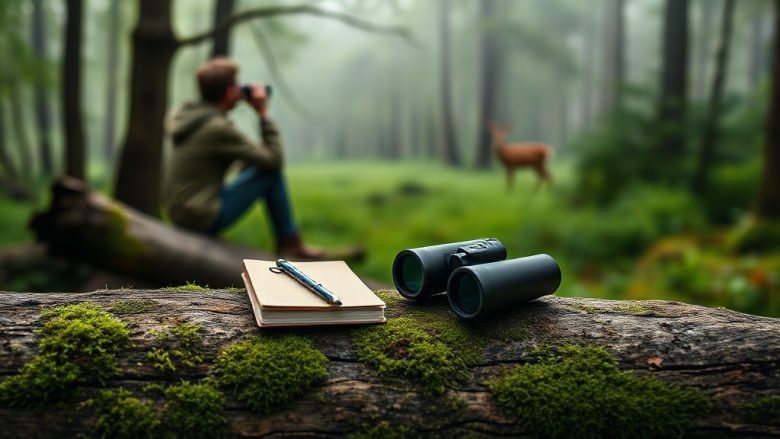
- Binoculars. You don’t need expensive ones. A pair of 8×42 binoculars is a good balance of magnification and light gathering. Look for ones that feel comfortable in your hands and focus smoothly. Second-hand is fine.
- A notebook and pencil. Writing down what you see helps you remember and learn. Note the date, time, weather, and behaviour. Pencil works in the rain; ink doesn’t.
- Layers and waterproofs. Even in summer, early mornings are cold. Wear muted colours—greens, browns, greys. Bright colours make you stand out.
- Sturdy shoes. You’ll be standing still for long periods and walking on uneven ground. Comfortable, quiet footwear matters.
- Water and a snack. Patience is easier when you’re not hungry or thirsty.
- A phone or camera. Use it for reference photos, not for chasing the perfect shot. A blurry record shot is better than no memory at all.
- A small torch with a red filter. Red light disturbs nocturnal animals less than white light. Useful for evening walks.
That’s it. No camouflage ghillie suit, no professional telephoto lens, no night-vision goggles. Keep it simple and you’ll actually use what you bring.
How to Behave: The Art of Not Being Noticed
This is where most beginners go wrong. We’re used to moving fast, talking loudly, and expecting the world to come to us. Wildlife watching is the opposite. You go to the wildlife, quietly, and you wait.
- Move slowly and deliberately. Sudden movements trigger alarm responses. If you need to turn your head, do it like you’re moving through honey.
- Keep quiet. Whisper if you must speak. Avoid rustling bags, zipping jackets, or crunching leaves. Sound travels further than you think.
- Stop and scan. Walk a few steps, then stand still for a full minute. Look for movement, listen for calls, check the edges of paths and trees. Most animals see you before you see them.
- Use your peripheral vision. Don’t stare directly at an animal’s face. Many species read direct eye contact as a threat. Look slightly to the side and watch them with your soft focus.
- Never chase or corner an animal. If it moves away, let it go. If it stops what it’s doing to watch you, you’re too close. Back off slowly.
- Keep your distance. Use binoculars or a zoom lens to get closer, not your feet. A good rule: if the animal changes its behaviour because of you, you’re too close.
- Don’t feed wildlife. It makes animals dependent on humans, spreads disease, and can make them aggressive. Leave their diet to them.
- Control your dog. If you’re walking a dog, keep it on a lead in areas where wildlife is present. Even a friendly dog is a predator to a nesting bird.
- Leave no trace. Take all litter home, stick to paths, and don’t pick plants or disturb logs and rocks. That microhabitat is someone’s home.
One habit that transformed my watching: arrive at a spot, sit down, and do nothing for ten minutes. No phone, no fidgeting. Just watch and listen. Animals that fled when you arrived often creep back out once they’ve decided you’re not a threat. That’s when the real show begins.
Where to Look: Finding Wildlife Close to Home
You don’t need a safari. Some of the best wildlife encounters happen in ordinary places. The trick is learning where to look and what to look for.
- Your own garden or balcony. Put up a bird feeder, leave a patch of long grass, or add a shallow dish of water. Within days, you’ll have visitors. Hedgehogs, frogs, and insects all use small green spaces.
- Local parks and cemeteries. These often have mature trees, hedges, and quiet corners. Early morning is best before dog walkers arrive.
- Rivers, canals, and ponds. Water attracts everything. Look for kingfishers on overhanging branches, herons standing still in the shallows, and dragonflies patrolling the edges.
- Woodland edges and hedgerows. These transition zones are rich in life. Listen for rustling in the undergrowth and watch for birds flitting between cover.
- Brownfield sites and scrubland. These unglamorous places are often teeming with insects, reptiles, and small mammals. Don’t overlook them.
- At night. A whole different world wakes up. Bats, moths, owls, and foxes. Sit quietly with a red torch and listen.
Start small. Pick one local patch and visit it regularly. Over time, you’ll learn its rhythms—where the wren sings, which tree the woodpecker favours, where the fox crosses the path. That local knowledge is worth more than any exotic trip.
Frequently Asked Questions
Do I really need binoculars to start wildlife watching?
No. You can enjoy a lot with your naked eyes, especially for larger mammals and birds that come close. But a basic pair of binoculars opens up a new level of detail. Borrow a pair first or buy second-hand to see if you like it.
What’s the best time of year for a beginner?
Spring and early summer are fantastic because everything is active and visible. Autumn brings migration and foraging behaviour. Winter is quieter but can be rewarding for tracking and seeing animals against bare branches. Every season has something to offer.
How do I avoid scaring animals away?
Move slowly, stay quiet, wear muted colours, and keep your distance. If an animal looks directly at you and stops what it’s doing, freeze or back off slowly. Patience is your best tool.
Is it okay to use a camera flash?
Avoid flash around nocturnal animals and in low light. It can startle them and affect their night vision. Use natural light where possible, and never use flash on a nesting or resting animal.
Wildlife watching is a skill you build one quiet outing at a time. Start with these basics, be kind to the creatures you meet, and you’ll find that the natural world rewards patience more than anything else. Good luck out there.